
The Future of Vertical Gardening: How 3D Printing
Is Transforming Green Living
Vertical gardening has evolved from a niche landscaping trend into one of the fastest-growing
solutions for modern homes, apartments, schools, restaurants, and commercial buildings. As urban
spaces become more compact and homeowners seek sustainable ways to grow food and beautify
their surroundings, vertical gardens are proving that you don’t need a large yard to enjoy lush
greenery.
The next major innovation in this space is 3D printing. Companies such as VerdeForma are
exploring how advanced additive manufacturing can create modular, customizable vertical garden
systems that combine attractive design with practical functionality.
Why Vertical Gardens Continue to Grow in Popularity
Vertical gardens maximize growing space, beautify walls, improve privacy, support pollinators, and
make herbs and vegetables easier to grow in small spaces.
How 3D Printing Changes Everything
3D printing enables lightweight modular planters, custom drainage, integrated reservoirs, organic
shapes, and expandable systems without expensive tooling.
The VerdeForma Concept
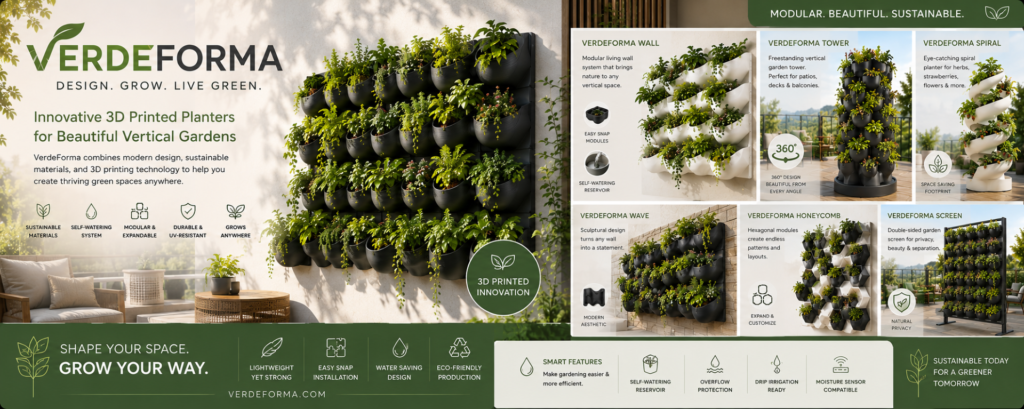
VerdeForma envisions premium modular collections including the Wall, Wave, Tower, and
Honeycomb systems. Features may include self-watering reservoirs, UV-resistant materials, hidden
irrigation, recycled materials, and tool-free installation.
Best Plants
Herbs, leafy greens, strawberries, tomatoes, flowers, and succulents all perform well in thoughtfully
designed vertical garden systems.
Looking Ahead
As additive manufacturing advances, 3D-printed vertical gardens will become more customizable,
sustainable, and accessible, helping homeowners and businesses transform small spaces into
productive living walls.